

As an Amazon Associate I earn from qualifying purchases.
The best 3D printer under $200 is the one that fits both your projects and your actual checkout price. For useful household prints, a filament (FDM) machine is the smarter first purchase. For miniature figures, tiny textures and jewelry masters, consider resin—but budget for a safe washing and curing workflow too.
Our practical starting point is the Creality Ender-3 V3 SE for a full-size first FDM printer, the ELEGOO Neptune 3 Pro when you need taller prints, and the ELEGOO Mars 5 for intricate resin detail. The Bambu Lab A1 mini, Anycubic Kobra 4 and Photon Mono 4 earn conditional recommendations only when the exact printer falls within the price limit.
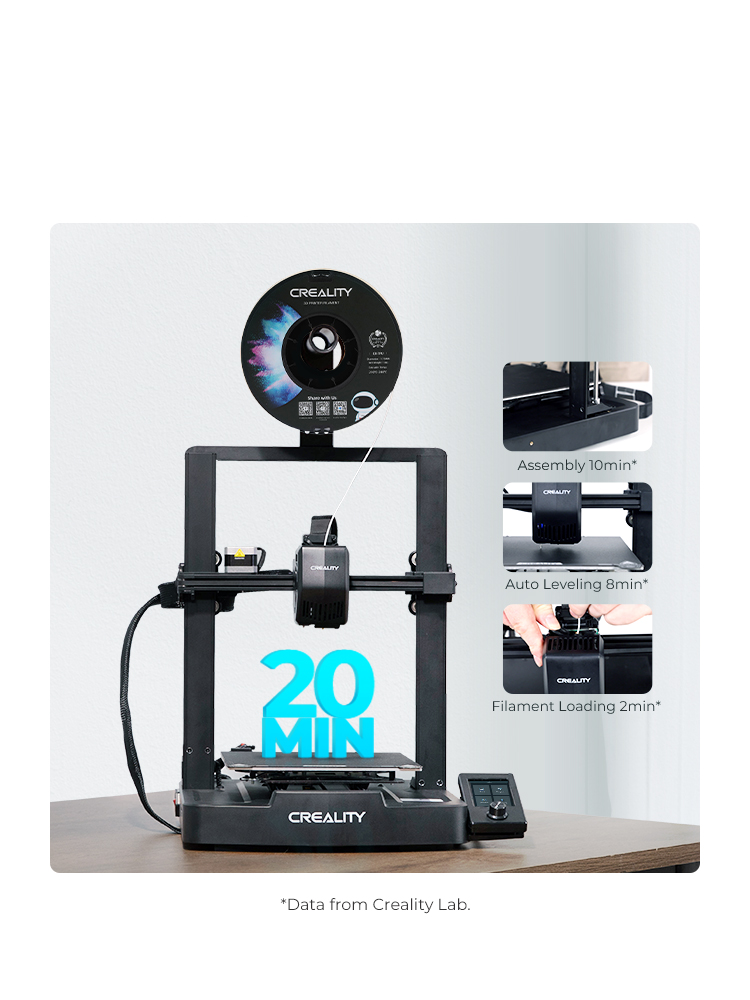
Versatile first printer for useful craft items and medium-size parts.

More build height for vases, costume pieces and organizers.

ELEGOO Mars 5 (standard, not Ultra)
Sharp resin details—with added finishing and safety costs.
This choice matters more than the printer’s quoted top speed. FDM melts a spool of plastic; MSLA resin printers cure a shallow vat of liquid photopolymer. A cheap resin printer is not automatically a cheap setup, and a small filament printer is not automatically bad for miniatures.
The table deliberately separates technical fit from price eligibility. “Sale-dependent” means you should not assume today’s regular offer is under the ceiling. Scroll sideways on smaller phones to see every column.
| Printer | Choose it for | Technology | Build volume | Price eligibility |
|---|---|---|---|---|
| Creality Ender-3 V3 SE | Everyday FDM crafts | FDM / filament | 220 × 220 × 250 mm | Usually a budget contender; verify listing |
| ELEGOO Neptune 3 Pro | Taller FDM objects | FDM / filament | 225 × 225 × 280 mm | Often under cap on sale |
| Bambu Lab A1 mini (printer only) | Easy FDM workflow | FDM / filament | 180 × 180 × 180 mm | Sale-only; standalone version |
| Anycubic Kobra 4 (standalone) | Large FDM projects | FDM / filament | 260 × 260 × 260 mm | Deep promotion only |
| ELEGOO Mars 5 (standard, not Ultra) | Resin miniatures | MSLA / resin | 143.4 × 89.6 × 150 mm | Often under cap (printer only) |
| Anycubic Photon Mono 4 | Fine resin surface detail | MSLA / resin | 153.4 × 87 × 165 mm | Discount-dependent |
Build volume is the maximum printable rectangle or box, not a guarantee that any model will succeed at the maximum limits. A moving-bed machine needs room outside those dimensions. Tall resin prints also need headroom to lift the cover and remove the build plate.
Build plate widths at a glance (FDM only)
180 mm
220 mm
225 mm
260 mm
Bars represent nominal X-axis build width only; Z height and actual desk footprint are different. Resin printers use a different workflow and are not included in this FDM-width chart.
For each recommendation, the first question is whether the exact version currently fits the budget. Features and limitations below come from model-specific manufacturer documentation; we do not claim hands-on testing.
What you actually get
For a beginner who wants to print more than tiny miniatures, the Ender-3 V3 SE is a practical place to begin. Its usable build plate is much bigger than that of the A1 mini, yet the CR Touch leveling system and automatic Z-offset remove two of the most irritating tasks on older low-cost Enders. It is suitable for PLA organizers, craft jigs, desk stands and custom replacement parts.
Its direct-drive extruder is also a sensible platform for flexible TPU, although beginners should learn with PLA first. The tradeoff is a more hands-on software and maintenance experience than the Bambu, with less integrated monitoring. The manufacturer lists 250 mm/s as a maximum movement-related print speed, but real results depend on the model, material and slicer settings; do not expect every job to print at that rate.
Skip it if: Skip it if your main goal is exceptionally detailed tabletop miniatures, or you want a more automated cloud-connected experience.
Listing reality: The Amazon link is an exact Ender-3 V3 SE variant; confirm current sale price and seller.
What you actually get
The Neptune 3 Pro trades headline speed for a useful, easy-to-understand feature set. Its 280 mm build height is a material difference for taller vessels and decorative shapes, and the direct-drive extruder plus PEI magnetic bed make it a versatile PLA-and-PETG workshop machine. It is one of the easier recommendations to justify for someone who values physical print space over app features.
Because it is an older design, expect a more traditional slicing-and-file-transfer workflow than on newer networked printers. The print bed moves back and forth, so measure the bench area with clearance for that movement and the top-mounted spool. Do not assume its dimensions describe the minimum room it needs in operation.
Skip it if: Skip it if maximum out-of-box automation and a smaller physical footprint outweigh build height.
Listing reality: The Amazon ASIN identifies the Neptune 3 Pro, though the marketplace price can exceed the threshold.
Price check required: The exact standalone Amazon listing was not verified. Compare model and package details carefully before purchasing; an Amazon accessory or Combo is not this machine.
What you actually get
If the standalone A1 mini falls to your price ceiling, its automated calibration and smooth Bambu Studio workflow can save more frustration than a slightly larger bed. It is a particularly good fit for craft ornaments, mini planters, small game accessories and first-time makers who would rather design than adjust hardware.
The 180 mm cube is its key limit: trays, helmets and full-size household parts may need to be split or made elsewhere. More importantly, the A1 mini standalone and A1 mini Combo are not the same purchase. The Combo adds the AMS lite material system and normally costs substantially more. Do not pay for the Combo assuming it is a sub-$200 deal, and do not mistake a small LED accessory kit for the printer.
Skip it if: Skip it if the actual printer price is above your ceiling, you need larger parts, or you intend to print ABS/ASA without a properly designed setup.
Listing reality: No Amazon ASIN for the exact standalone printer was confirmed; no affiliate button is shown.
Price check required: The exact standalone Amazon listing was not verified. Compare model and package details carefully before purchasing; an Amazon accessory or Combo is not this machine.
What you actually get
The Kobra 4 stands out because a 260 mm square plate offers markedly more space than either the A1 mini or Ender-3 V3 SE. That is useful for large organizers, display bases, masks split into fewer pieces and home-improvement templates. The manufacturer also highlights remote monitoring and a newer setup workflow.
However, it should not be treated as an ordinary under-$200 printer: its non-promotional manufacturer listing is higher, and short-lived discounts may be needed. Also be precise with the box contents: Kobra 4 is a single-color machine. The Kobra 4 Combo includes the separate ACE 2 Pro multicolor system, and that is not part of this recommendation.
Skip it if: Skip it if the price rises above $200 or you want the four-color Combo in the same budget.
Listing reality: An exact standalone Amazon ASIN was not confidently established; review contains no shopping link.
What you actually get
For tabletop figures, small jewelry prototypes and models with embossed faces or surface texture, the Mars 5 is more appropriate than a typical low-cost FDM printer. Its light-curing process resolves the kinds of tiny surface features that are difficult to recreate with a standard 0.4 mm filament nozzle. Automatic leveling helps simplify the early learning steps.
Resin printing has a very different setup cost and safety routine. Uncured liquid resin can irritate skin, prints must be washed and fully cured, and the printer belongs in an appropriately ventilated controlled work area—not a child’s bedroom or kitchen. The standard Mars 5 is also not the Mars 5 Ultra: verify that the product page and machine name match the standard model.
Skip it if: Skip it if your entire project budget—not just the printer—is $200, or if you need large functional household parts.
Listing reality: Exact Amazon listing is for the standard Mars 5, not the Ultra.
What you actually get
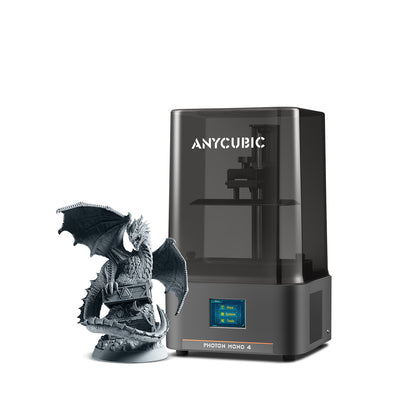
The Photon Mono 4 suits hobbyists who prioritize very small surface features, such as scale-model trim, gaming miniatures and jewelry masters. Its 10K panel has a smaller nominal XY pixel pitch than the standard Mars 5’s 4K screen; pixel pitch is a specification, not a guarantee that every print will be better. Resin, exposure profile, supports, washing and post-cure matter greatly.
Unlike the Mars 5, the Photon Mono 4 uses a four-point manual leveling routine. It is not difficult to learn, but it is another operation the owner must understand. The optional carbon purifier is not included, and odor reduction is not a substitute for proper ventilation. Official manufacturer and retail prices vary enough that this recommendation is conditional on a verified under-cap offer.
Skip it if: Skip it for large prints, an automatic leveling preference or a workspace without adequate environmental controls.
Listing reality: The exact Mono 4 Amazon ASIN was checked; confirm standalone configuration and price before buying.
A machine advertised under $200 is not necessarily ready to make your intended finished objects on day one. Count the supplies you need now, not only the upgrades you might choose someday. In particular, resin-machine add-ons are essential safety and finishing steps, not luxury accessories.
For a more precise material estimate, CraftyHangouts also has a 3D crafting tools hub with filament and resin cost estimators. If you are still deciding between the two methods, see our resin versus filament comparison.
Choose an object
A simple, small test piece before a large project.
Check dimensions
Measure against X, Y and Z and allow for supports.
Pick material
PLA first for FDM; manufacturer-compatible resin for MSLA.
Prepare the workspace
Stable, ventilated space; PPE and wash/cure station for resin.
Slice the model
Select the exact printer, material and recommended profiles.
Watch first layers
Stop failed adhesion early; never leave a risky setup unattended.
Finish responsibly
Cool and remove FDM parts; wash and fully cure resin prints.
| Problem | First thing to check | Do not assume |
|---|---|---|
| FDM first layer peels up | Clean plate, material-specific temperatures, first-layer calibration | You need glue on every print |
| FDM wisps/stringing | Dry filament, nozzle temperature, retraction profile | Faster printing solves moisture |
| FDM clicking or underextrusion | Filament path, nozzle clog, heat and spool drag | The entire extruder is defective |
| FDM corners curl | Drafts, bed adhesion and model cooling settings | Higher nozzle heat alone is the answer |
| Resin print falls from plate | Leveling, exposure settings, support contact, vat film | A stronger UV screen is always needed |
| Resin detail disappears | Resin exposure, support placement, wash and cure times | 10K automatically prevents every failure |
Yes, when the machine reliably prints your intended size and material. A good entry FDM printer can handle useful household objects and many crafts. A resin machine can excel at miniatures, but a true all-in resin setup will generally cost more than the printer alone.
For a practical, larger-bed FDM starting point, compare the Ender-3 V3 SE and Neptune 3 Pro at their current checkout prices. If the A1 mini standalone is genuinely discounted to $200 or less, its automated setup can be the easier user experience, but its build volume is smaller.
Resin is often preferable for extremely small surface textures on miniatures. FDM can still be useful for terrain, bases and larger figures, particularly with careful profiles and a smaller nozzle, but it will not produce the same fine texture by default.
Do not assume so. Open printers are strongest beginner choices for PLA and often PETG/TPU. ABS/ASA need an appropriate controlled environment and ventilation; the A1 mini manufacturer explicitly does not recommend those materials.
Do not confuse the base A1 mini with the Combo. The Combo includes AMS lite and is a different, higher-priced package. An A1 mini standalone promotion does not imply the Combo meets the same price ceiling.
A bedroom is not a suitable default resin-printing location. Uncured resin requires careful handling, gloves, eye protection, effective ventilation, washing and UV curing. Consult the resin safety data sheet and manufacturer instructions, and plan how to contain and dispose of waste.
The number of items depends on their wall thickness, infill, supports and failed prints. Slicer-estimated grams multiplied by your filament cost per gram is a better guide than counting models per spool.
A manufacturer-certified refurbished printer can save money, but compare warranty, completeness, return rights and consumable condition. A refurbished price should not be presented as the new-printer price.
For a conventional craft workspace, start with the Ender-3 V3 SE if it meets the price cap, or the Neptune 3 Pro for taller models. If simple setup matters more than build area, keep an eye out for a genuine standalone A1 mini deal. For detailed miniatures, the Mars 5 is our easier resin starting point—only once you have budgeted for safe post-processing. The correct purchase is the one that meets your project needs and the complete checkout and running-cost realities.